The Magic of Air Color: Painting Canyons with Light and Atmosphere
There’s something humbling about standing at the edge of the Grand Canyon. The scale is staggering — cliffs layered in soft violets, deep reds, dusty ochres — but what truly overwhelms you isn’t the rock. It’s the air color that transforms landscape painting.
Light dances through miles of space. Colors shift with the atmosphere. And when you sit down to paint it… something strange happens.
For the beginning student, it all turns brown.
When the Canyon Goes Flat
For five years, I taught plein air painting at the Grand Canyon. My students — many of them talented and observant — would study the view, mix their colors, and fill their canvases with rocky cliffs. But over and over, I saw the same issue: the paintings felt dark, heavy, and flat.
They were painting what they thought they saw: brown rocks. I saw the same problem again and again: the canyon kept turning brown.
But they weren’t painting what they felt: the spaciousness, the atmosphere, the light-filled air between those canyon walls.
The real canyon — with its luminous layers, subtle distance, and glowing light — was missing.
So I started asking: What color is the air?
That question led me to develop a color mixture I now call "Air" or "Atmosphere" color — a soft blend of titanium white, ultramarine blue deep, and cadmium red light. It’s not meant to paint rocks or shadows directly. It’s a way to capture the atmosphere — the air itself — that gives canyon and landscape scenes their sense of depth, light, and majesty.
A New Way of Seeing
Out of this frustration came a simple, powerful solution I now call Air Color — a mixture of:
🎨 Titanium White + Ultramarine Blue Deep + Cadmium Red Light
It’s not a formula for cliffs or shadows. It’s a way to capture the light and space between. This color doesn’t describe the surface of the canyon — it evokes the canyon and landscapes spirit.
And when my students started using it? Their paintings transformed. Suddenly, the cliffs breathed. The shadows lifted. The whole scene felt unified, atmospheric, and full of life.
What Makes Air Color So Magical?
Air or Atmosphere Color gives your landscape paintings the following:
A harmonious tone that ties all elements together
A sense of spaciousness and distance
A soft, glowing light that reflects how the eye really sees
At the Grand Canyon, it’s the key to showing those faraway cliffs fading into lavender light.
But I’ve found that this color mixture works anywhere there's atmosphere — in desert vistas, mountain ranges, open skies, and coastal cliffs.
How to Use Air Color: Painting Tips
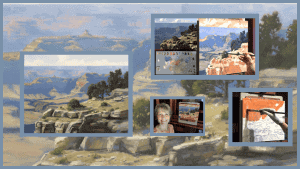
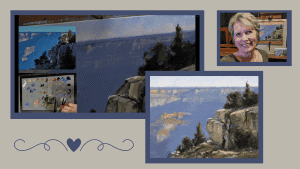
Watch me demonstrate how I use Air Color in a painting of the Grand Canyon, created in the studio.
Why Brown Misses the Mark
For years, while teaching plein air painting at the Grand Canyon, I saw students struggle with this exact problem. They would reach instinctively for brown to capture the rock formations — and while technically not wrong, the results felt heavy, muddy, and lifeless.
The Grand Canyon isn't brown.
It's light-filled, spacious, and glowing with atmosphere.
So I created something to help.
The Birth of Air Color
Out of this teaching challenge came what I now call Air Color — a soft, subtle, atmospheric mixture of:
This isn’t a formula for rocks, cliffs or landscapes — it’s a formula for AIR. It captures the distance, soft light, and harmonious atmosphere that makes the canyons and landscapes breathtaking.
🖌️ "Air" or "Atmosphere" color turns rock into poetry. It lets your painting breathe. This is how air color transforms landscape painting.
Beyond the Grand Canyon
Although I developed this color while teaching at the Grand Canyon, I’ve come to realize it’s useful in almost any landscape where space and light play a role:
Coastal cliffs at sunset
Desert plains with distant mesas
Forests in early morning fog
Mountain valleys after rain
Anywhere there’s a sense of depth, air, and atmospheric light, Air Color helps you express it.
The Images below with Scattered Air Color
Analyze the paintings below and noticed all the scattered "Air" or "Atmosphere" color that is placed throughout the scene. This helps create beautiful color harmony.


Learn How To Mix Beautiful Earth Colors
Some Great Creative Resources for You!
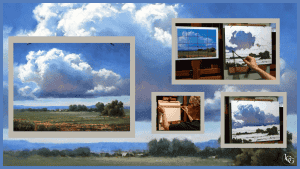
Below is a video lesson that is chock-full of AIR Color! Take a seat and watch me build this cloud using my beautiuful air color. Also a discussion of what I'm working on next. A little welcome to my Studio! Be INSPIRED!!!